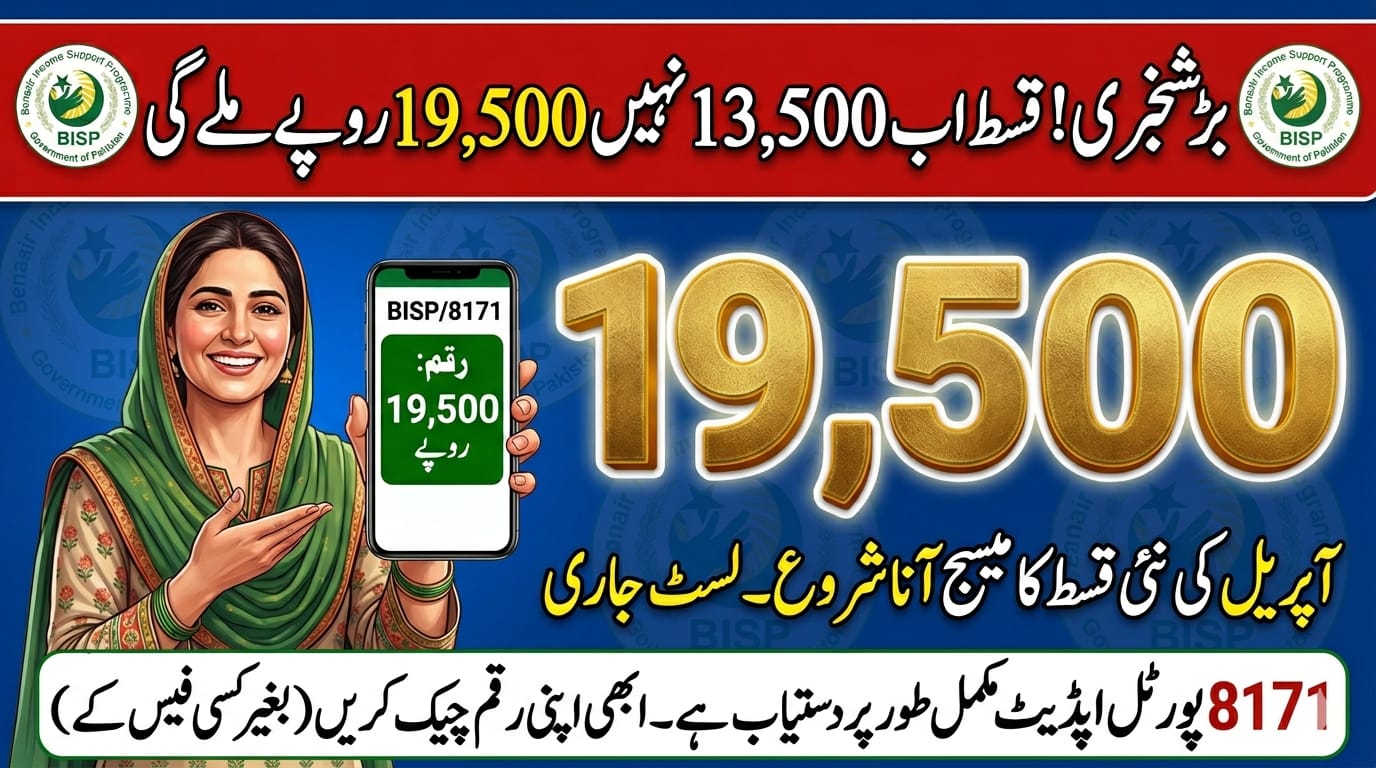
The Benazir Income Support Programme (BISP) continues to play a vital role in supporting low-income families across Pakistan. As inflation rises and economic challenges grow, the government has introduced several new updates in 2026 to strengthen the program and expand its reach. These changes aim to improve transparency, increase financial assistance, and ensure that deserving families receive timely support.
This article provides a complete overview of the latest updates in BISP, including payment increases, new eligibility rules, digital payment systems, and future plans.
Increase in Financial Assistance
One of the most significant updates in 2026 is the increase in quarterly payments under the BISP Kafalat program. The government has raised the amount from PKR 10,500 to PKR 13,500 per quarter.
This increase is designed to help families cope with rising living costs, including food, electricity, and essential household expenses. With inflation impacting daily life, this step offers much-needed relief to millions of beneficiaries.
Expansion of Beneficiaries
Another major development is the expansion of the program. The government is working to increase the number of registered families to 10 million beneficiaries.
This expansion ensures that more deserving households—especially those in rural and underdeveloped areas—can benefit from financial assistance. It also reflects the government’s commitment to reducing poverty and supporting vulnerable communities.
Introduction of Bank Account System
In 2026, BISP took a significant step toward modernization by introducing a bank account-based payment system. Previously, beneficiaries had to collect cash through agents or payment centers, which often caused delays and transparency issues.
Now, eligible women are being encouraged to open personal bank accounts. Payments will be transferred directly into these accounts, offering several advantages:
- Faster and more secure transactions
- Reduced risk of fraud and deductions
- Greater financial independence for women
- Improved transparency in fund distribution
This initiative is expected to transform how financial aid is delivered in Pakistan.
Digital Transformation and Transparency
BISP has also introduced advanced digital tools to monitor and manage the program effectively. A real-time digital dashboard system is now being used to track payments, registrations, and beneficiary data.
This digital transformation helps authorities:
- Identify eligible families more accurately
- Eliminate fake or duplicate registrations
- Monitor fund distribution in real-time
- Improve decision-making using data analysis
As a result, the program is becoming more efficient and transparent than ever before.
Updated Eligibility Criteria
To ensure that only deserving individuals benefit from the program, BISP has updated its eligibility criteria. The selection process now relies heavily on the National Socio-Economic Registry (NSER) survey data.
Families may qualify if they meet the following conditions:
- Low monthly income
- No government job in the household
- Limited or no ownership of property or vehicles
- Female-headed households are given priority
People who were previously ineligible are encouraged to update their information through the NSER survey to reassess their eligibility.
Registration Process for New Applicants
The registration process has also been simplified to make it easier for new applicants. Individuals can visit the nearest BISP registration center and provide the required documents, including:
- Valid CNIC
- Family details
- Income information
After verification, eligible applicants are added to the program and start receiving payments.
Additionally, mobile registration vans are being introduced in remote areas to help people who cannot easily access registration centers.
Special Relief Packages
During special occasions such as Ramadan, the government provides additional relief packages under BISP. These packages may include:
- Extra cash payments
- Subsidized food items
- Emergency financial support
Such initiatives help families manage increased expenses during important times of the year.
Challenges and Improvements
Despite its success, BISP still faces some challenges, including:
- Overcrowding at payment centers
- Lack of awareness in rural areas
- Technical issues in registration systems
However, the government is actively working to resolve these problems by improving infrastructure, increasing awareness campaigns, and introducing safer payment methods.
Future Plans for BISP
Looking ahead, the government aims to further enhance the program by:
- Expanding digital payment systems nationwide
- Increasing financial assistance regularly
- Integrating BISP with other welfare programs
- Improving data collection through advanced surveys
These steps will ensure that BISP remains a strong pillar of social protection in Pakistan.
Conclusion
The Benazir Income Support Programme continues to evolve in 2026 with significant improvements in payment amounts, transparency, and accessibility. The introduction of bank accounts, expansion of beneficiaries, and use of digital systems highlight the government’s commitment to supporting low-income families.
For More Information Click Here